


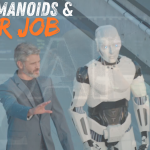


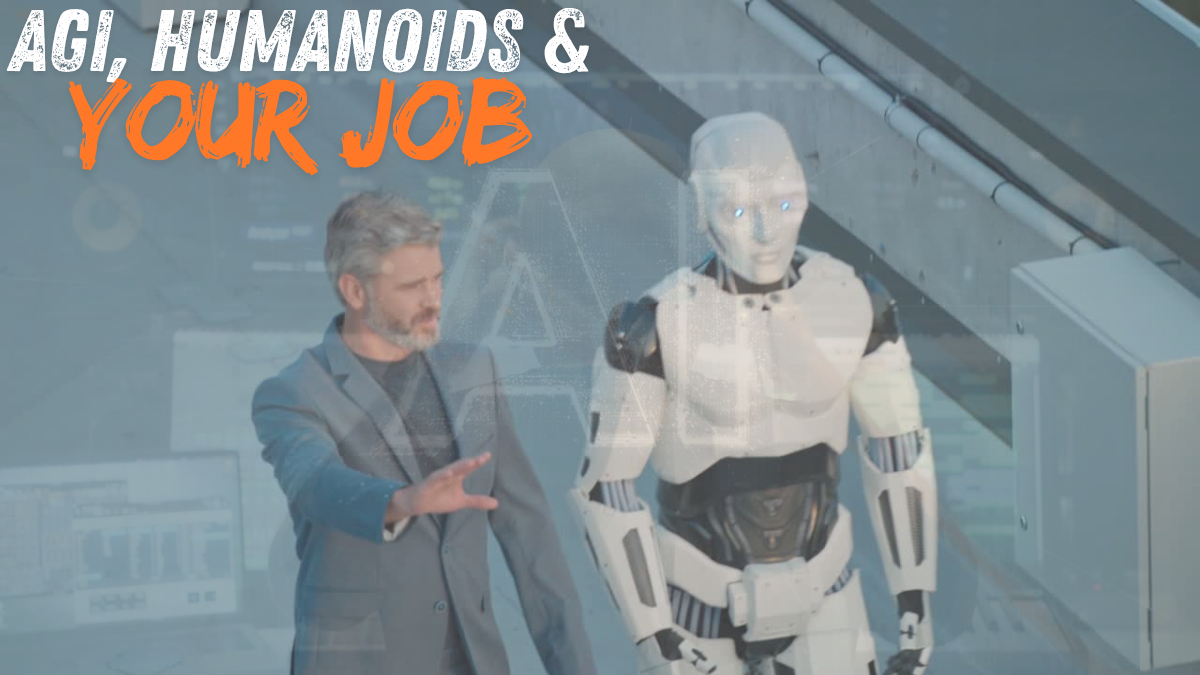

AGI in 2027 + Humanoids Around the Corner = Scary Unemployment
The conversation around AI is evolving. We are now talking AGI, which stands for Artificial General Intelligence. It’s the idea of an AI system that can do any intellectual task a human can, not just one thing, but everything across different domains.
This is no longer about tools that help us work faster. It’s about systems that may replace work altogether.
Leaders building the future are starting to say the quiet part out loud.
Dario Amodei warns that AI could eliminate up to half of entry-level white-collar jobs and drive unemployment to 20% or higher in the next few years.
Mustafa Suleyman goes even further. He suggests that most computer-based jobs, such as marketing, legal work, and accounting, could be automated within 12 to 18 months.
Let that sink in.
Then there’s Geoffrey Hinton, often called the “godfather of AI.” He warns that AI could replace “many, many jobs” very soon, creating serious disruption across society.
Stuart Russell raises the stakes even higher. He has warned that we could be looking at extreme unemployment levels, with AI capable of replacing nearly every job, including highly skilled roles.
And this isn’t just software.
Elon Musk is pushing the combination of AGI and humanoid robots. His vision? A world where machines handle both thinking and physical work, making human labor optional.
That’s the real shift.
And yes, leaders like Dario Amodei, Mustafa Suleyman, Geoffrey Hinton, Stuart Russell, and Elon Musk are all warning us in different ways.
But that’s not the real story.
The real risk isn’t AGI. It’s how casually we’re rushing to deploy it.
We’re watching one of the most powerful technologies in human history being built and scaled in real time… with no consistent rules, no shared standards, and very few guardrails.
Speed is winning.
Not ethics. Not thoughtfulness. Not long-term thinking.
So let’s ask a better question: Just because we can automate something… Should we?
Because right now, we are:
- Replacing humans before we understand the consequences
- Building dependency on systems we don’t fully control
- Optimizing for efficiency while ignoring societal impact
- Treating disruption like progress
This may be innovation… But also acceleration without direction.
And here’s the uncomfortable truth: Guardrails are harder than breakthroughs.
They require alignment. Discipline. Trade-offs. Accountability.
Things the tech world isn’t always known for prioritizing.
But if we don’t build them now, we may not get a second chance later.
Because once these systems are embedded into the fabric of society, reversing course becomes nearly impossible.
The future of work isn’t being decided by AI.
It’s being decided by the people deploying it.
So the real question is:
👉 Will we lead this ethically and responsibly… or just fast?