




The Most Dangerous AGI Decision? Deploy First. Think Later.
You can’t have a conversation these days without speaking about Artificial Intelligence (AI) and Artificial General Intelligence (AGI). But I find people asking the wrong question about AGI/AI.
“Will AI take our jobs?”
That question is already outdated.
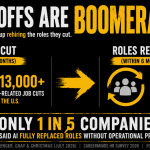
AI is not coming. It’s here. It’s writing code, creating content, analyzing data, and making decisions faster than most humans ever could. The real shift is already underway, and its impact on jobs is not beginning but accelerating.
So the better question is this:
👉 Are we building any guardrails before we hand over the keys?
Because right now, the honest answer is… Not really.
Some of the people closest to this technology are raising serious concerns. Dario Amodei has warned that AI could eliminate a large percentage of entry-level white-collar jobs. Mustafa Suleyman has suggested that most work done on a computer could soon be automated. Geoffrey Hinton has warned about widespread job disruption, and Stuart Russell has even raised the possibility of extreme unemployment.
At the same time, while Elon Musk offers words of caution, he is pushing toward a future in which humanoid robots handle both thinking and physical labor. When you combine advanced AI with robotics, you’re no longer just talking about software. You’re talking about replacing human effort across almost every domain.
This is no longer science fiction. It’s a direction of travel.
And right now, it feels like a race.
Companies are moving fast. Founders are shipping quickly. Investors are chasing the next breakthrough. Everyone is focused on building, scaling, and winning.
In a race like this, speed wins.
Not ethics. Not reflection. Not long-term thinking.
That’s where real risk lives.
Because the problem is not that AI is advancing. The problem is that we are advancing it without clearly defined boundaries. We are deploying systems that can influence decisions, replace human roles, and shape outcomes at scale, without fully understanding the consequences.
So what would real guardrails look like?
First, we need to stop thinking about AI as just another product. This is not a new app or a better piece of software. This is infrastructure for society. It will shape how we work, how we make decisions, and how we create value. That means every serious AI system should be held to a higher standard. A simple starting point is this: what harm could this system cause, and who is accountable when it does? If there is no clear answer, that system is not ready.
Second, risk should determine access. Not every model should be open, and not every capability should be released immediately. As AI systems become more powerful, the level of control should increase, not decrease. Right now, we see the opposite. The more capable the system, the faster it gets pushed into the market. That approach may win in the short term, but it increases long-term risk.
Third, independent testing should be standard. In industries like aviation or medicine, companies don’t get to declare their own systems safe. There are external reviews, stress tests, and regulatory checks. AI should be no different. Red-teaming, adversarial testing, and third-party audits should be expected, not optional. If a system can impact millions of people, it should not be evaluated only by the team that built it.
Fourth, humans must remain in the loop where it truly matters. Certain decisions carry significant consequences: hiring, healthcare, finance, and justice. In these areas, AI can support decisions, but it should not replace human accountability. If an AI system makes a bad call, someone must own that outcome. If the answer is “no one,” then the system has already failed a basic ethical test.
Fifth, we need to talk about labor guardrails. Most discussions focus on efficiency and productivity, but far fewer focus on people. It is not enough to say “workers will adapt” or “new jobs will be created.” We need serious and ethical conversations and real structures that support that transition. That includes transparency around role replacements, time for workers to adapt, and real investment in reskilling. Disruption without responsibility is not progress. It is displacement.
Here’s the uncomfortable truth: guardrails slow things down.
They require alignment. They require discipline. They require trade-offs. And in a competitive environment, those things are often seen as weaknesses.
But without guardrails, we are not innovating responsibly.
We are accelerating while wearing a blindfold.
We are building systems that may outperform us, without deciding how they should behave, where they should stop, or who they should serve. Once these systems are deeply embedded in society, it becomes much harder to change course. At that point, the cost of correction becomes far higher than the cost of prevention. It is at this point that the government needs to act, but then we’ve seen how well that works out.
AI is not deciding the future of work.
It is decided by the people deploying it.
So before we ask what AI can do next, we need to ask a harder question:
👉 What are we unwilling to let it do?
Because if we do not define those limits now, we may lose the ability to define them later.
And that is a risk far bigger than job loss.