





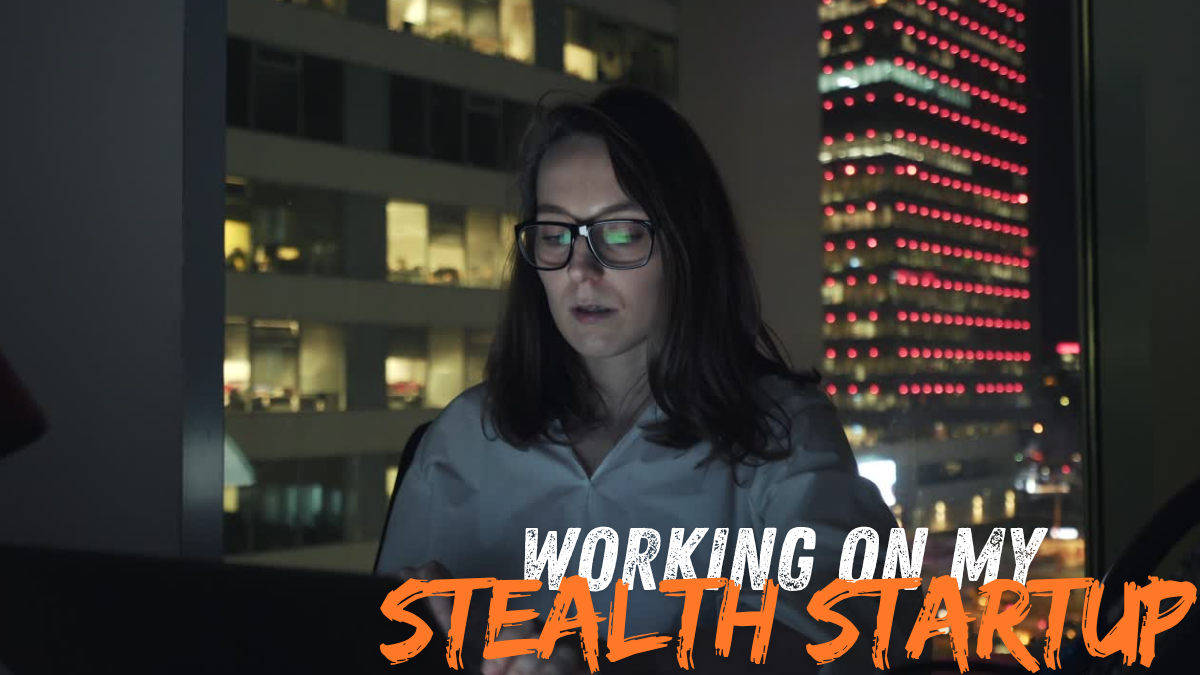

Holding Your Stealth Startup Idea Hostage In Your Bedroom
The hidden cost of founder isolation and why startup ecosystems must stop confusing networking events with meaningful collaboration.
There’s a strange contradiction in the startup world. Entrepreneurs dream of building companies that change industries, disrupt markets, and solve problems nobody else has solved. Yet many spend their days locked away in bedrooms, home offices, and garages, working alone, convinced they’re making progress.
They code. They design. They research. They refine their business plans. They polish pitch decks. They convince themselves that another week of development will bring them closer to success.
But here are a couple of uncomfortable questions: How do you know that there are enough people who care? Are you building a company, or just keeping yourself busy?
I’ve spent years working with thousands of entrepreneurs, and one pattern continues to stand out. Some of the smartest, most technically talented founders are also the most isolated. They’re brilliant at solving technical problems but reluctant to engage with the very people who could help them build successful businesses.
And it’s costing them more than they realize.
The Comfort of Working Alone
Let’s face it. Working alone is comfortable. Nobody questions your assumptions. Nobody challenges your business model. Nobody asks whether customers actually need what you’re building. You control your schedule, your priorities, and, most importantly, your version of reality.
For technical founders, this isolation can feel especially productive. Engineers and scientists are trained to solve complex problems through research, experimentation, and persistence. They often believe that if they build something technically superior, customers will eventually recognize its value.
Unfortunately, markets don’t work that way, especially for unknown and unproven entities.
Customers don’t buy technology because it’s brilliant. They buy solutions to big problems they want to address NOW and are willing to pay for.
And you can’t discover those problems by talking only to yourself.
Is It Secrecy, Fear, or Something Else?
Over the many years, I have personally said and heard it all. Some founders avoid engaging with others because they’re afraid someone will steal their idea. They treat their concept like a classified government project, revealing as little as possible.
Here’s something worth considering. Your idea probably isn’t as unique as you think. Somewhere, someone else may already be working on something similar. Your competitive advantage isn’t simply having an idea. It’s understanding the customer, learning faster, and executing effectively and faster than your competition. If you believe that it is very easy to steal your idea, you likely shouldn’t be wasting your time on it.
Others avoid engagement because they’re uncomfortable being challenged. When you’ve invested months or years developing something, hearing that your assumptions might be wrong can feel personal.
Then there’s imposter syndrome. First-time founders often assume everyone else knows more than they do. Rather than risk asking a question that exposes their inexperience, they stay home.
But entrepreneurship isn’t a competition to see who knows the most. It’s a continuous process of discovering what you don’t know.
The founders who ask better questions often learn faster than those pretending to have all the answers.
The Isolation Trap
The longer you work alone, the more attached you become to your assumptions. The more attached you become, the less interested you are in hearing conflicting opinions. Eventually, you surround yourself with information that confirms what you already believe.
Meanwhile, the marketplace keeps moving.
Potential customers change their priorities. Competitors discover opportunities you haven’t considered. Technologies evolve. Investors shift their interests. Other founders build relationships that open doors to customers, partners, and talent.
And you’re still in your bedroom, perfecting version 3.7 of a product nobody has agreed to purchase.
Think about that for a moment.
You might be working 70 hours a week and moving further away from building a viable business.
Being busy isn’t the same as making progress.
Other Founders Are Not Your Competition
One of the biggest mistakes I see founders making is failing to recognize the value of relationships with other entrepreneurs.
I’m not talking about exchanging business cards at another networking event or listening to someone deliver a presentation you’ve heard a dozen times. I’m talking about meaningful founder-to-founder engagement.
Imagine sitting with five other entrepreneurs, each struggling with a different challenge. One has figured out customer discovery. Another has successfully negotiated a pilot agreement. Someone else understands intellectual property strategy, fundraising, or the recruitment of technical talent.
You share experiences. You challenge assumptions. You make introductions. You learn from mistakes you haven’t made yet.
And perhaps most importantly, you discover you’re not alone.
A 30-minute conversation might save you six months of pursuing the wrong strategy.
This isn’t a waste of time; rather, it’s accelerating your learning and execution.
Stop Looking for Cheerleaders
There’s another reason founders isolate themselves. They don’t want to hear uncomfortable truths.
They want encouragement, validation, and people who tell them their idea is brilliant. But encouragement without honest feedback can become dangerous.
Your startup doesn’t need another cheerleader telling you how wonderful your technology is. It needs people willing to ask difficult questions.
Who has the problem? How painful is it? What are customers doing today? Why would they switch? Who will pay? What evidence supports your assumptions?
Great founders don’t avoid these questions. They actively seek people willing to challenge them.
And great mentors don’t simply provide answers. They help founders discover better questions.
Your Next Breakthrough Might Be a Conversation Away
I’m not suggesting founders should spend their days attending every startup event. Many gatherings offer little practical value, and time is the one resource entrepreneurs cannot recover.
But isolation isn’t the answer.
Find a handful of serious tech founders who are serious about building companies. Meet regularly. Share your challenges. Ask uncomfortable questions. Offer help without expecting something in return. Build relationships before you need them. If you are in Oro Valley/Tucson Metro, join us at Startup Zones events and bring a friend.
Then get out and talk with potential customers. Not to sell them your idea, but to understand their problems.
You might discover that the technology you’ve spent months developing needs a different application. You might meet someone who becomes your cofounder, first customer, strategic partner, or most trusted mentor.
Or you might discover that your original assumptions were wrong.
That’s not failure. That’s progress. That is becoming aware of opportunity costs.
So here’s my challenge: If you’ve spent more time talking to your computer than talking to customers and other founders this month, what exactly are you building?
A technology project?
Or a scalable business? The difference might be waiting outside your bedroom door.
Join us at Startup Zones in Optics Valley or find out where tech founders meet in your ecosystem.